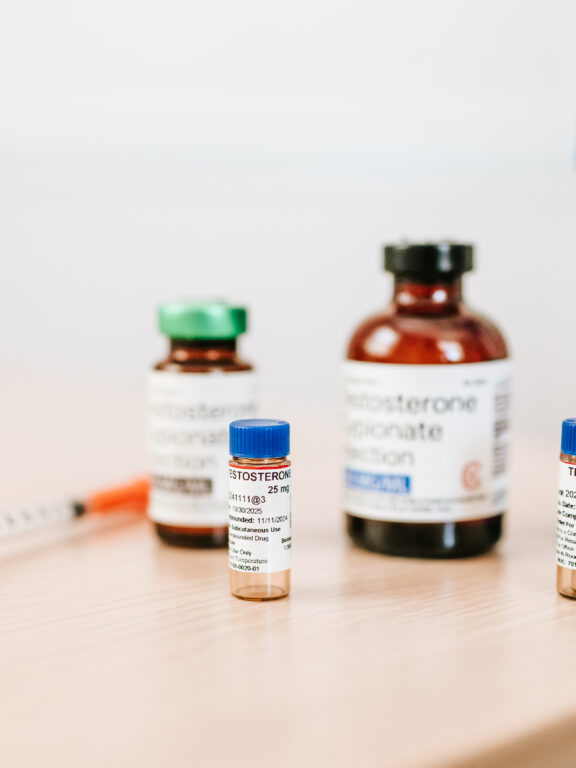

If you’ve been researching medical weight loss options, you’ve likely come across two names: tirzepatide and semaglutide. Both are among the most commonly prescribed GLP-1 medications available today, and both have shown meaningful results in clinical settings. But they’re not interchangeable, and understanding the differences can help you have a more informed conversation with your provider.
This article breaks down how each medication works, what clinical studies show about weight loss outcomes, how their side effect profiles compare, and what factors might make one a better fit than the other for your individual goals.
What’s the Difference Between Tirzepatide and Semaglutide?
Both medications work by mimicking hormones that regulate blood sugar and appetite, but they target different receptors in the body.
Semaglutide activates GLP-1 (glucagon-like peptide-1) receptors. This signals the brain to reduce hunger, slows the rate at which the stomach empties, and helps regulate blood sugar levels. The result is a reduced appetite and, for many patients, meaningful weight loss over time.
Tirzepatide activates two receptors: GLP-1 and GIP (glucose-dependent insulinotropic polypeptide). GIP is another gut hormone that plays a role in fat storage, energy balance, and appetite regulation. By targeting both pathways simultaneously, tirzepatide produces a more pronounced hormonal response, which may contribute to its stronger weight loss outcomes in clinical trials.
In practical terms: semaglutide is a single-agonist medication, while tirzepatide is a dual-agonist. That distinction matters when comparing their effectiveness.
Tirzepatide vs Semaglutide: Side-by-Side Comparison
| Category | Semaglutide | Tirzepatide |
| How it Works | Activates GLP-1 receptors to reduce appetite and slow digestion | Activates both GLP-1 and GIP receptors for a dual hormonal effect |
| Brand Names | Ozempic (diabetes), Wegovy (weight loss) | Mounjaro (diabetes), Zepbound (weight loss) |
| FDA-Approved Uses | Type 2 diabetes management; chronic weight management, cardiac indications including history of heart attack or stroke | Type 2 diabetes management; chronic weight management, sleep apnea |
| Administration | Weekly subcutaneous injection | Weekly subcutaneous injection |
| Typical Weight Loss | Up to ~15% of body weight in clinical trials | Up to ~20-22% of body weight in clinical trials |
| Common Side Effects | Nausea and constipation (higher GI side effect profile comparatively) | Nausea and diarrhea (somewhat lower GI side effect profile comparatively) |
| Cost Considerations | Varies by insurance; brand-name cost without coverage can be significant.Compounded options may reduce cost. | Varies by insurance; brand-name cost without coverage can be significant Compounded options may reduce cost |
| Treatment Duration | Ongoing; typically long-term use for sustained results | Ongoing; typically long-term use for sustained results |
Which Medication Produces More Weight Loss?
In clinical trials, tirzepatide has generally outperformed semaglutide in terms of average weight loss. The SURMOUNT-1 trial found that participants taking tirzepatide lost up to approximately 20–22% of their body weight. The STEP trials for semaglutide showed average weight loss of around 15%.
Head-to-head data is still emerging, but early comparisons suggest tirzepatide tends to produce greater weight reduction on average. That said, these are population-level averages; individual results vary considerably based on starting weight, adherence to treatment, dietary habits, physical activity, and other health factors.
Neither medication delivers results in isolation. Patients who see the most significant and lasting outcomes are typically those who combine medication with sustainable lifestyle changes and consistent follow-up with their provider.
How Do Side Effects Compare?
Both tirzepatide and semaglutide share a similar side effect profile, since both act on the GLP-1 receptor. Tirzepatide’s added GIP pathway tends to produce a somewhat gentler GI experience for many patients, though individual response varies. The most commonly reported side effects for each include:
- Nausea
- Vomiting
- Constipation
- Diarrhea
- Muscle loss
- Hair loss
GI side effects like nausea, vomiting, constipation, and diarrhea are most pronounced during the dose escalation phase, when the medication is being gradually increased to the target dose. For many patients, they lessen significantly once the body adjusts to treatment.
Muscle loss and hair loss deserve special attention, since they’re less talked about but can meaningfully affect how a patient looks and feels during treatment. Rapid weight loss can come from muscle as well as fat, particularly without adequate protein intake and resistance exercise, and significant weight change can also trigger temporary hair shedding. Neither is inevitable. This is one of the biggest reasons why who manages your weight loss medication matters. At Cassie Lane Med Spa, we take a proactive approach to side effect management: tracking body composition with our InBody scanner to help preserve muscle while fat is lost, running lab work and recommending targeted supplements to support hair health, and adjusting dose escalation to help you avoid nausea before it becomes a problem. Rather than waiting for side effects to appear, our goal is to help you avoid them altogether, or catch and address them early.
Neither medication carries a significantly higher safety risk than the other based on current evidence. Both share a small risk of more serious (and less common) side effects, including pancreatitis and changes in heart rate. Patients with a personal or family history of medullary thyroid cancer or multiple endocrine neoplasia syndrome type 2 are advised against use of either medication.
Side effect experience is highly individual. Some patients tolerate one medication better than the other, which is one reason provider evaluation and ongoing monitoring matter throughout treatment.
Cost and Insurance Considerations
Cost is one of the most practical factors in medication selection, and one that varies significantly from patient to patient.
Both tirzepatide and semaglutide are brand-name medications with list prices that can be substantial without insurance coverage. Brand names include Ozempic and Wegovy for semaglutide, and Mounjaro and Zepbound for tirzepatide.
Insurance coverage depends on your specific plan and the indication for which the medication is being prescribed. Some plans cover weight loss medications; others do not, or may cover only certain brands.
Compounded versions of both medications are also available through some providers, including Cassie Lane Med Spa. When a compounded medication is sourced from a reputable pharmacy, made with high-quality ingredients, and administered under medical supervision, it can offer real advantages: a lower cost than brand-name pens, and more flexible, customizable dosing than what’s commercially available off the shelf. Not all compounded products are created equal, so sourcing, ingredient quality, and medical oversight are all worth discussing with your care team before choosing this route.
For many patients, insurance coverage and access to a trusted compounding option are the deciding factors between the two medications—not clinical preference. If your plan covers one but not the other, or if a compounded formulation fits your budget better, that often drives the initial treatment choice, with clinical adjustments made over time if needed.
Who May Be a Better Candidate for Tirzepatide?
Tirzepatide may be worth discussing with your provider if:
- You have a higher weight loss goal and want to maximize potential outcomes based on clinical trial data
- You have not achieved your desired results with semaglutide or other GLP-1 medications
- Your insurance plan covers tirzepatide with manageable out-of-pocket costs, or a compounded option fits your budget
- Your provider determines, based on your full medical history, that the dual-agonist mechanism is appropriate for you
It’s worth noting that “more aggressive” doesn’t always mean “better” for every individual. Stronger weight loss can sometimes come with more pronounced side effects during dose escalation, and your overall health profile matters as much as your weight loss goals.
Who May Be a Better Candidate for Semaglutide?
Semaglutide continues to be an effective and well-studied option for many patients. It may be the preferred choice if:
- Your insurance plan provides better coverage for semaglutide brands like Wegovy or Ozempic
- You’ve responded well to semaglutide in the past or have a history with GLP-1 medications
- Your provider recommends starting with a single-agonist approach based on your health history
- You have specific cardiovascular considerations. Semaglutide has robust cardiovascular outcome data, including demonstrated risk reduction in patients with existing heart disease
Semaglutide’s longer track record and more extensive long-term data can also be a factor for providers and patients who want well-established evidence as a baseline.
Which Medication Is Right for You?
There’s no universal answer. The right medication depends on a combination of factors that are unique to you: your medical history, current health conditions, weight loss goals, insurance coverage, how you tolerate side effects, and your provider’s clinical assessment.
What we do know is that both medications represent meaningful advances in medical weight loss, and that either, used as part of a comprehensive treatment plan, can produce real results for the right patient. Just as important as the medication itself is who’s guiding you through treatment. Proactive, personalized side effect management, avoiding nausea before it starts, protecting muscle mass, and monitoring for hair loss, is what separates a prescription from a well-managed treatment plan. The conversation about which one to try, and how to manage it well, is best had with a qualified medical provider who knows your full picture.
Start With a Personalized Weight Loss Consultation
Choosing between tirzepatide and semaglutide is a medical decision, and it’s one you shouldn’t have to make alone. At Cassie Lane Med Spa, our providers take a personalized approach to medical weight loss, evaluating your health history, goals, and lifestyle to recommend a treatment plan that’s built around you.
Medication is one part of a larger strategy. We’re here to help you understand your options, proactively manage side effects like nausea, muscle loss, and hair loss, track your progress with tools like our InBody composition scanner, and make adjustments when needed. Long-term results come from ongoing support, not just a prescription.
Ready to take the next step? Schedule a consultation with our team to learn which option may be right for you.