If you’ve been researching options for sun damage, redness, or uneven skin tone, you’ve probably come across both IPL and laser treatments, and wondered what actually sets them apart. Both can dramatically improve the look and feel of your skin, but they work in different ways and are designed to treat different concerns. Understanding those differences is the key to choosing the treatment that will actually get you the results you want.
In this guide, we’ll break down how IPL and laser treatments work, which skin concerns each one addresses best, what recovery looks like, and how to decide which option is right for your skin goals.
What’s the Difference Between IPL and Laser Treatment?
The easiest way to understand the difference is to think about light.
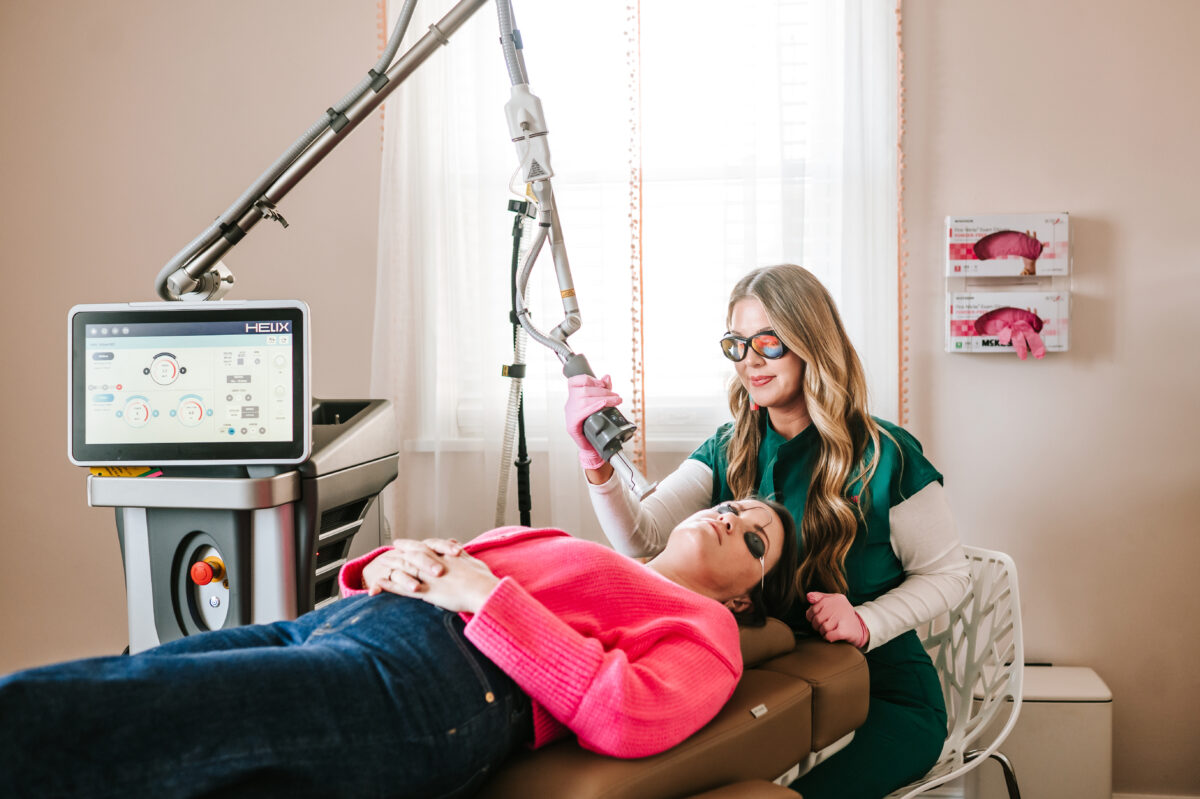
Laser treatments use one precise, focused wavelength of light. A provider selects a specific wavelength based on the exact concern being treated, then targets that concern directly, almost like using a pinpoint laser pointer.
IPL, or intense pulsed light, works differently. Instead of one wavelength, IPL emits hundreds of wavelengths at once, targeting hemoglobin (in blood vessels) and melanin (pigment) across a broader area. Think of it like a flashlight: everything within that beam of light gets treated at the same time.
Because IPL treats a wider area at once, it’s especially effective for generalized concerns spread across the skin, like overall sun damage or redness. Because laser is more targeted, it’s often the better choice for treating one specific spot or lesion without putting unnecessary heat on the surrounding skin.
IPL vs. Laser Treatment: Side-by-Side Comparison
| IPL | Laser | |
| Technology | Broad-spectrum light (multiple wavelengths at once) | Single, focused wavelength |
| Best Treatment Areas | Larger, generalized areas (face, chest, hands, arms, legs) | Specific, targeted spots or lesions |
| Skin Concerns Treated | Sun damage, pigmentation, redness, rosacea, freckles, age spots | Fine lines, deeper wrinkles, acne scars, vascular lesions, skin resurfacing |
| Treatment Sessions | Often done in a series, with maintenance sessions over time | Varies by concern and depth of treatment |
| Downtime | Minimal, mild redness or sunburn-like sensation for a few hours | Can range from minimal to more noticeable depending on the laser used |
| Recovery | Pigment may darken and exfoliate off naturally over several days | Recovery depends on treatment intensity and area |
| Pain Level | Generally mild | Varies by treatment type and depth. Numbing is a valuable tool for more powerful treatments. |
| Results | Gradual improvement in tone, texture, and pigment over a series | Targeted correction of specific concerns |
| Cost Considerations | Typically more cost-effective | Cost varies based on customization and precision required |
What Skin Concerns Does IPL Treat Best?
IPL is best suited for concerns that are spread out across the skin rather than isolated to one spot. This includes:
- Sun damage and age spots
- Generalized pigmentation and freckles
- Redness and rosacea, especially across the cheeks
- Overall skin tone and texture concerns
Because IPL treats a broad area in a single pass, it’s a great option for patients dealing with widespread sun damage, whether that’s on the face, chest, hands, or arms. Many patients don’t realize IPL can be used beyond the face; it’s just as effective for sun damage on the arms, trunk, and legs.
One important note: IPL works by targeting melanin, which means it’s best suited for lighter skin types. Patients with darker skin tones are typically better candidates for targeted laser treatments, which can be customized to treat pigment safely without affecting surrounding melanin.
What Skin Concerns Are Better Treated With Laser?
Laser treatments shine when precision matters. Because a provider can select a specific wavelength for a specific concern, laser is often the better choice for:
- Fine lines and deeper wrinkles
- Acne scars and other types of scarring
- Skin resurfacing
- Individual vascular lesions, like a cherry angioma or a visible blood vessel
For example, if a patient has a single prominent blood vessel on the face or chest, a provider might use a targeted 1064 wavelength with a single, precise pulse to collapse that vessel — without applying unnecessary heat to the skin around it. That level of precision is difficult to achieve with a broader treatment like IPL, and it’s why laser is typically recommended when the concern is isolated rather than widespread.
Which Treatment Has Less Downtime?
Both treatments involve relatively minimal downtime compared to more invasive procedures, but recovery looks a little different for each.
With IPL, most patients experience redness and a mild sunburn-like sensation for a few hours after treatment. Those with more sensitive skin may stay red a bit longer, but discomfort is generally mild. In the days following treatment, treated pigment often appears darker before it naturally exfoliates off. This is a normal part of the process, not a sign of irritation, and patients should avoid picking or scrubbing the area as it clears. Treated blood vessels may also darken temporarily before fading, or in some cases disappear right away.
For patients being treated for vascular concerns, providers typically recommend avoiding hot baths, saunas, spicy foods, alcohol, and intense exercise for up to a week afterward, since heat and increased blood flow can affect healing as well as results.
With laser treatments, downtime depends on the specific wavelength and intensity used. More targeted, deeper treatments may involve more noticeable redness or sensitivity for a longer period, particularly when addressing deeper concerns like resurfacing or significant scarring.
Which Treatment Delivers Better Results?
There isn’t a universal answer to which treatment delivers “better” results. It depends entirely on the concern being treated. IPL and laser are built for different jobs: IPL excels at improving tone and texture across a broader area, while laser is designed for precise correction of a specific concern.
It’s also worth setting expectations around maintenance. Because sun damage and pigmentation tend to recur (especially with ongoing sun exposure) most patients benefit from periodic IPL maintenance sessions a few times a year after completing an initial series. How often maintenance is needed depends on sun protection habits, skincare routine, and how much sun exposure a patient typically gets.
The right measure of success isn’t which technology is more advanced, it’s whether the treatment plan is matched to the concern.
How to Choose Between IPL and Laser Treatment
A few key factors help determine which treatment is the right fit:
- Skin type and tone. IPL is generally recommended for lighter skin types (1–3), while laser options offer more flexibility for darker skin tones.
- Whether the concern is widespread or isolated. Generalized redness or pigment often responds well to IPL, while a single lesion or deeper wrinkle may call for a targeted laser.
- Downtime preferences. IPL typically involves less downtime, while some laser treatments may require more recovery time depending on intensity.
- Treatment goals. Broad improvement in tone and texture versus precise correction of a specific concern.
- Provider recommendation. Every skin concern is different, and a provider can assess your specific goals to recommend the most effective and appropriate treatment.
Start With a Personalized Skin Consultation
IPL and laser treatments are both effective, but the best results come from matching the right technology to your specific skin concerns, not from choosing a treatment based on popularity or trend. A personalized consultation is the best way to determine which option (or combination of both) will get you closer to your skin goals.